
Cybersecurity for Connected and Autonomous Mobility
Autonomous vehicles depend on software, sensors, artificial intelligence, vehicle networks, external communications, and cloud based mobility services to perceive their surroundings and make driving decisions. Dawon provides operational intelligence, threat detection, risk management, and response across the vehicle and its supporting mobility ecosystem.
- Fleet Operations
- Roadside Infrastructure
- Navigation Services
- Mobility Control Centre
Cybersecurity Extends Across the Vehicle Ecosystem
The security boundary of an autonomous vehicle extends beyond the vehicle itself. Its operation may depend on positioning services, digital maps, V2X communications, fleet management platforms, software update infrastructure, mobile applications, service tools, APIs, and third party components.
A compromise within any part of this ecosystem can affect vehicle behaviour, passenger safety, fleet availability, sensitive data, or public transportation services.
Perception and Sensor Integrity
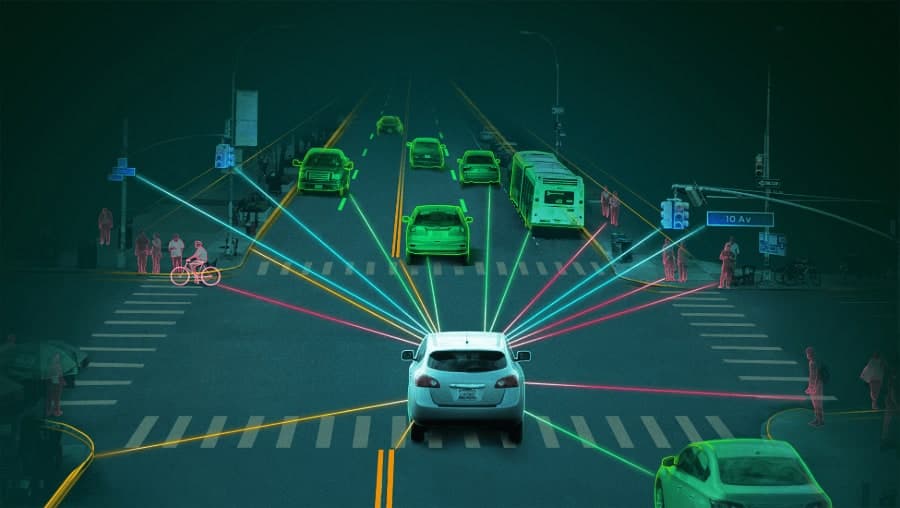
Autonomous driving functions rely on cameras, radar, LiDAR, ultrasonic sensors, GNSS, and other sources of environmental data. Manipulated, spoofed, jammed, or inconsistent sensor inputs can affect localization, object recognition, path planning, and vehicle decisions.
Complex Vehicle Architectures
Electronic control units, central compute platforms, gateways, vehicle networks, and safety critical functions operate through increasingly software defined architectures. Weak separation between externally connected systems and vehicle control functions can create pathways to safety critical components.
Expanding External Connectivity
Cellular services, Wi-Fi, Bluetooth, V2X, mobile applications, diagnostic interfaces, charging systems, telematics, and cloud APIs expand the number of potential entry points into the mobility environment.
Continuous Software Change
Autonomous and connected vehicles receive frequent updates to software, firmware, maps, applications, and AI components. Unauthorized or poorly controlled changes can affect vehicle security, functionality, and regulatory status.
Distributed Supply Chain Responsibility
OEMs, software developers, component suppliers, fleet operators, mapping providers, connectivity partners, and maintenance organizations contribute to the vehicle lifecycle. Security therefore depends on coordinated responsibilities and traceable supplier assurance.
Fleet Scale Consequences
A vulnerability in a shared component, service, credential, or software version may affect multiple vehicles simultaneously. Risk must be evaluated at both the individual vehicle and fleet levels.
Security Across the Autonomous Driving Architecture
Dawon connects vehicle, software, fleet, and threat intelligence to establish a unified understanding of autonomous mobility risk.
Vehicle and Ecosystem Intelligence
Develop contextual intelligence across vehicles, electronic control units, onboard software, sensors, communication interfaces, fleet platforms, cloud services, APIs, charging infrastructure, and maintenance systems. Map the relationships between vehicle functions and external services to understand how a compromise could affect driving behaviour or fleet operations.
Perception and Navigation Assurance
Correlate security events and operational data associated with cameras, radar, LiDAR, GNSS, digital maps, localization systems, and AI enabled perception functions. Identify activity that may indicate sensor interference, inconsistent data, or unauthorized system changes.
Vehicle Communication Intelligence
Monitor security relevant activity across in vehicle networks, telematics, V2X services, wireless interfaces, diagnostic connections, and vehicle to cloud communications. Detect abnormal communication patterns and unexpected access paths.
Fleet Wide Threat Detection
Correlate events across individual vehicles, software versions, geographic locations, and backend services to identify coordinated activity, repeated anomalies, and emerging threats that may affect an entire fleet.
Software and Configuration Assurance
Maintain intelligence across software versions, firmware, electronic control units, open source components, AI models, configuration baselines, and update histories. Support the identification of affected vehicles when new vulnerabilities or supplier risks emerge.
Safety Aware Incident Response
Develop response playbooks for compromised vehicles, unauthorized commands, sensor anomalies, malicious software updates, cloud service disruption, and fleet wide incidents.
One Vehicle, One Ecosystem, One Assurance Layer
Antennas
GNSS · V2X
- GNSS & Maps
- V2X Infrastructure
Telematics Gateway
CELLULAR · CLOUD · OTA
- Fleet Platform
- Cloud Services
- OTA Updates
Physical Ports
CHARGE · DIAGNOSTIC
- Charging & Maintenance
- 01SensorsCAMERA · RADAR · LIDAR · ULTRASONIC
- 02PerceptionOBJECT · RECOGNITION
- 03LocalizationGNSS · IMU · HD MAPS
- 04PlanningBEHAVIOUR · PATH PLANNING
- 05Vehicle ControlLATERAL · LONGITUDINAL
- 06ActuatorsSTEER · BRAKE · PROPULSION
ASSETS · PERCEPTION · COMMUNICATIONS · SOFTWARE · FLEET · RESPONSE
- External service into a crossing point
- In vehicle networks
- Covered by the assurance layer
Every external service reaches the driving pipeline through one of three crossing points. The gateway between connectivity and vehicle control is the boundary that decides what a compromise outside the vehicle can reach inside it.
Applications Across Autonomous Mobility
Dawon
AUTONOMOUS MOBILITY SECURITY
- Passenger & Robotaxi
- Transit & Shuttle
- Freight & Logistics
- Industrial & Off Highway
- Development & Validation
- Electric & Connected
Passenger Vehicles and Robotaxis
Protect autonomous driving functions, passenger applications, vehicle connectivity, fleet platforms, and supporting mobility services across individually owned and shared autonomous vehicles.
Public Transport and Autonomous Shuttles
Support secure operation of connected buses, autonomous shuttles, and public mobility fleets that depend on scheduling, positioning, passenger information, and central fleet management systems.
Freight and Logistics Fleets
Establish security intelligence across autonomous trucks, delivery vehicles, logistics platforms, telematics systems, depots, and fleet management infrastructure.
Industrial and Off Highway Vehicles
Secure autonomous and remotely supervised vehicles operating in mines, ports, airports, industrial facilities, construction sites, and other controlled operational environments.
Development and Validation Fleets
Protect test vehicles, engineering workstations, simulation platforms, data pipelines, development tools, and proving ground infrastructure used to design and validate autonomous driving functions.
Electric and Connected Fleets
Assess dependencies between vehicles, charging infrastructure, energy management systems, fleet platforms, payment services, and remote maintenance environments.
Lifecycle Assurance and Operational Outcomes
Cybersecurity must continue throughout the vehicle lifecycle, from the initial design of autonomous functions to software updates, field operations, maintenance, and decommissioning.
- 01Concept
- 02Development
- 03Integration
- 04Validation
- 05Deployment
- 06Operation
- 07Update
- 08Decommissioning
Approved update re enters development

Dawon helps organizations connect cybersecurity requirements, technical findings, supplier responsibilities, operational events, and supporting evidence across each stage.
Operational Outcomes
Contextual intelligence across vehicles and supporting mobility infrastructure
Earlier identification of abnormal vehicle, sensor, and fleet behaviour
Risk prioritization based on vehicle safety and operational consequences
Faster identification of vehicles affected by software or component vulnerabilities
Stronger governance of software updates, configurations, and AI components
Improved coordination between OEMs, suppliers, operators, engineering teams, and security teams
Fleet level incident investigation and response readiness
Traceable evidence for cybersecurity governance and regulatory assessments
Standards and regulatory alignment
Dawon streamlines alignment with applicable automotive cybersecurity and safety requirements, including:
- UNECE UN Regulation No. 155Vehicle cybersecurity and Cybersecurity Management Systems
- UNECE UN Regulation No. 156Vehicle software updates and Software Update Management Systems
- ISO/SAE 21434:2021Cybersecurity engineering across the road vehicle lifecycle
- ISO 24089:2023Road vehicle software update engineering
- ISO 26262Functional safety for road vehicle electrical and electronic systems
- ISO 21448Safety of the Intended Functionality
- NHTSA Cybersecurity Best PracticesFor the safety of modern vehicles
- Automotive Information Sharing and Analysis CenterSector best practices
- National requirementsApplicable national vehicle, privacy, AI, and transportation security requirements
Secure Autonomy Across the Mobility Ecosystem
Discuss how Dawon can support cybersecurity across autonomous vehicles, fleet operations, software infrastructure, and connected mobility services.